The Part of Me I Spent Thirty Years Trying to Defeat Was Right
Aug 13, 2026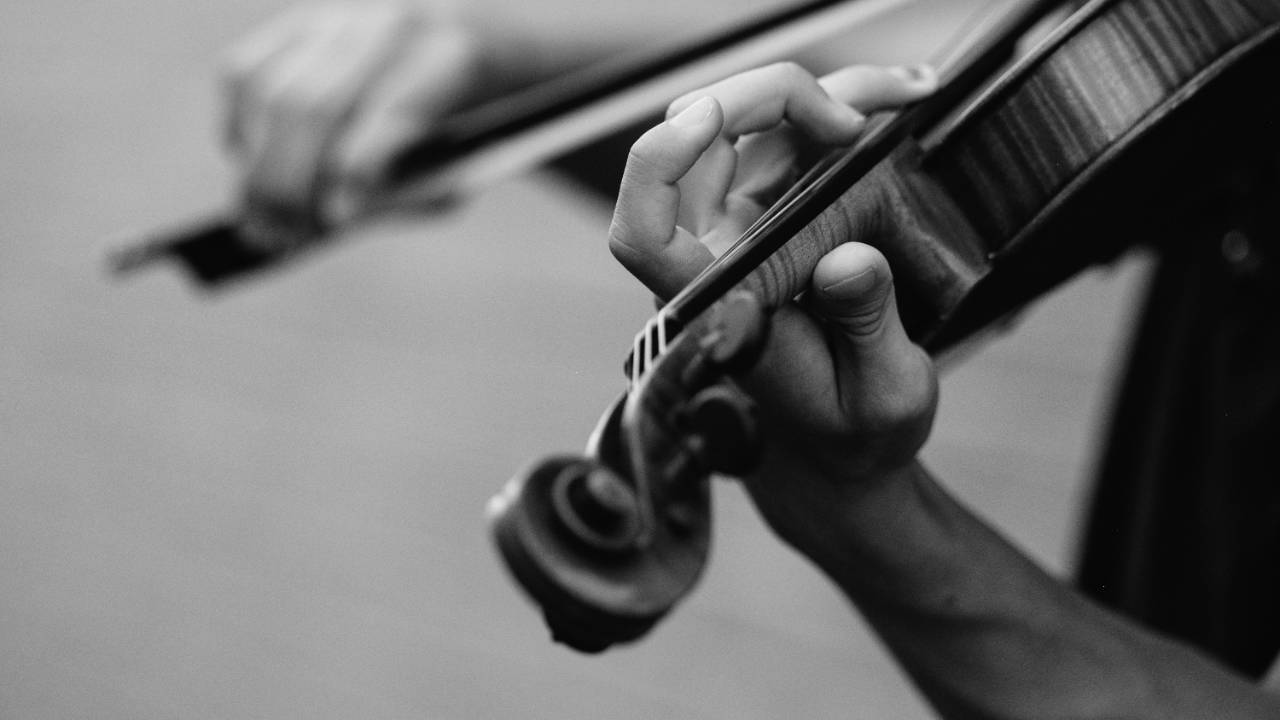
What if the resistance you can't push through was never self-sabotage — but the truest thing about you?
I used to be someone who never missed a day.
Three half-ironmans. Years of teaching yoga. A season when my husband was deployed and I was, by every visible measure, strong — I looked strong, I felt strong, I was strong. For a long stretch of my adult life, skipping a workout simply wasn't a thing that happened to me. Discipline was the water I swam in, and I was proud of it. It was part of my identity.
And then I did the deeper work — the slow, unglamorous work of changing my nervous system from the inside — and the consistency fell apart.
Not gradually. It fell off a cliff.
I found myself resisting movement with an intensity that genuinely confused me. I had the time. I had the knowledge — I was a personal trainer for twenty-five years, I could write you the program in my sleep. And still, I would open my day and a little part of me would cross its arms and refuse. I started to wonder if I'd broken something.
I hadn't. It took me a long time to understand what was actually happening, and I want to tell you — because if you are a woman who used to be relentless and has recently become, inexplicably and frustratingly, someone who resists the very things she used to love, this might be for you.
The engine, not the effort
Here's the thing no one tells you about "never missing a day."
A lot of that consistency — the kind high-capacity women are quietly praised for — isn't powered by love. It's powered by pressure. By a low hum of if I stop, something bad happens. It looks like discipline from the outside, and some of it is. But underneath, the engine is often running on bracing. On proving. On a body that learned a long time ago that its job was to perform.
So when you actually do the work — when you soften the bracing, when you stop running your life on pressure and vigilance — you don't just feel calmer. You pull the fuel out of the engine. And every behavior that was secretly running on that fuel sputters and stops.
That's what happened to me. My consistency wasn't discipline. It was pressure wearing discipline's clothes. And when I finally set the pressure down, the behavior it had been holding up had nothing left to stand on. The resistance I felt wasn't me falling apart — it was the evidence that something had actually changed.
I asked the resistance what it wanted
I do this work with clients all the time, so I turned it on myself. I got quiet and asked the resistance, directly: what are you protecting me from?
And I saw her. A little girl, maybe five years old, scrunched-up face, stringy blond hair, sitting back on her heels with her arms crossed and the most magnificent pouty lip you have ever seen. No. Just that. You can't make me. No negotiation, no explanation — pure mule energy. Not gonna budge.
My first instinct, and watch for this in yourself because it's sneaky, was to say I see you, I understand, in a voice that secretly meant now, for the love, can we please go exercise?!
Compassion as a technique. A softer costume on the same old agenda. And she wasn't fooled for a second. She's little, but she can smell a bait-and-switch from across the room.
Because that's what she's actually guarding against. Not movement — she has nothing against movement. She's guarding against being conscripted, against being overridden and pushed past her own signals and used like a machine that doesn't get a vote. At some point she took on the job of protecting me from being ground down, probably because no one else was going to. And "you can't make me" is the only sentence she's ever needed.
She's not new — she's the most consistent thing about me
When I really looked, I realized I'd met her before — and that I was never quite the woman who showed up every single day, not all the way down. It came in seasons. Some stretches I was relentless, the picture of consistency. Others, even when I looked every bit as disciplined from the outside, getting myself to move was a white-knuckle fight I usually lost. The never-miss-a-day version of me was real. She just wasn't the whole story.
Take high school. I was a cross-country captain, and to keep the position I had to run every day. And I was so good on Monday and Tuesday — sometimes I'd get a Wednesday in — and then Thursday and Friday would come and I simply would not do it. Saturday was a lost cause. So I'd tell myself, with total sincerity: Okay, we'll start Monday.
Why Monday? I've asked myself that for years. Monday is the clean slate, the day the failure gets wiped and you get to be reborn as the person who will finally comply. Every "we'll start Monday" is a small act of faith that the override will work this time if you just reset the clock and mean it harder. It never worked — not in high school, not since. Because the problem was never that I hadn't tried hard enough. The problem was that I was trying to force a body that had already voted.
I can trace her back further than that, too. I took violin lessons for fifteen years (age 5–20) in a family where excellence was the price of belonging. I was really good — and it was never quite good enough, because the terms were rigged before I ever picked up the bow. Perform, and you'll be worthy. Perform beautifully, and it still won't be enough. A very smart little girl, handed those terms early, learns to do two things at once: she becomes the consummate performer on the outside, and somewhere deep and private she plants a flag that says you can have the performance, but you cannot have my wanting. That part is mine. It wasn't until years later, when I stopped caring how I performed, that I started loving it (I was well into my 30's).
The girl with the crossed arms isn't the opposite of the good girl who performed. She's her twin. She's the part that kept a scrap of me free while the rest of me complied to stay loved. Which means she was never my saboteur. She's been telling the truth my whole life — she told it at seventeen, I want to do this because I love it, and when you force me, I don't — and no one, including me, believed her. We all treated her refusal as the problem to solve.
What if she was right the entire time?
The proof was already in my day
Here's what convinced me she wasn't anti-movement, that this was never about losing my edge.
My infrared sauna used to feel like a chore. Then something shifted, and now it's the first thing I look forward to in the morning — almost like dessert, the thing that sets up my whole day. Same body, same me. What changed is that the sauna never carried the old job. It came into my life already wearing the self-care coat, so she never had to guard it, and it got to become a pleasure.
My latest movement craze is taking West Coast swing lessons with my husband, and I am thrilled about it. It's movement — real coordination, real stamina — but it never once filed under "exercise" in my mind. It's play. It's connection. It's want. She doesn't guard the door marked joy, so movement walked right through it.
And yoga — a later-in-life love — pulls me in or pushes me away depending entirely on how it's framed: as fitness, it repels me; as rejuvenation, I can't stay away.
That's the whole thing, I think. Movement didn't leave me. It just stopped being available through the door marked discipline, and started coming back through the doors marked pleasure and connection and choice. That's not a lesser version. It might be the truer one.
So what do you actually do
I wish I could tell you the answer is a better system. It isn't — and if you're anything like me, that's the hard part, because a better system is exactly the kind of thing we're good at building, am I right!?!
The answer is smaller and stranger than that. It's consent.
Not "give up" and not "push through" — those are the only two moves most of us know, and they're both the two halves of me at war. The third thing is to stop making today's care conditional on her performing, and to start keeping small promises she actually gets to say yes to. To prove, one kept promise at a time, that the threat is gone — that I'm not going to override her the second the stakes feel high enough.
I took the words workout and exercise off my morning list entirely. Not a strategy hack — a renaming. The list now just says wake up the body. Fifteen small movements, a minute each, and I'm about forty percent consistent with them, and I've decided forty percent is genuinely fine. Because the forty percent I do is chosen, and the girl and I are slowly learning to trust each other again. That trust is the asset. The consistency, when it comes, will grow out of it — not the other way around.
I still know what the research says about strength and bone and muscle for women my age. That's true, and it will still be true in three months. But I've stopped letting it become a club I hit her with. Honoring her is the long game. Every time I override her to chase the outcome, I prove her right that I'll steamroll her when it matters — and the heels dig in deeper. The slow road is the only one that doesn't re-injure the ground I'm trying to heal.
And here's why this reaches so far past a morning workout. The pressure that made me relentless is the same pressure that built most of what I'm proud of, including the business. It works, right up until it doesn't. Because those were survival patterns, and survival is not the same as aliveness. The patterns that got you here were never designed to take you further — they were designed to get you through. If you keep running the next chapter on the same braced engine that ran the last one, you don't just get tired. You slowly start to resent the very thing you built. The exercise is only where I caught it first, because the stakes were low enough to see clearly. The higher-stakes version is quieter, and it looks like standing inside a life you created and realizing you don't want to be in it. What got you here genuinely can't take you there — not because you aren't capable, but because the fuel is the problem.
So if you're a woman who used to be relentless and has lately become someone who resists — I don't think you're backsliding, and I don't think you've lost your edge. I think something in you finally stopped being willing to be coerced, and it doesn't yet know that structure and coercion aren't the same thing. They can be separated. A promise you make freely and keep is the opposite of the violin. It's the proof that you can be trusted with your own life.
Your version has its own shape. Your own Monday. Your own captain. Your own girl with her arms crossed, who has maybe been telling you something true for a very long time.
What if you stopped arguing with her?
If any of this describes your own experience from the inside — that low hum of pressure you've been calling discipline, the resistance you can't strategize your way past — I made something for you. It's a free training called Find Your Regulated Edge, and it's about exactly this: what becomes available when you stop running your life on pressure and start building real capacity instead.
xo, Janeen
Janeen Alley is a somatic business coach and the founder of The Regulated Edge, where she helps high-capacity women build the internal capacity to hold the success they've already created. After eight years of running a business that made real money and still left her bracing, she rebuilt everything on a different premise: that the ceiling high-performing women keep hitting isn't a strategy problem — it's a somatic one. Strategy gets you there; capacity is what lets you stay. She's a yoga teacher, a recovering never-miss-a-day athlete, and the creator of the free training Find Your Regulated Edge.
GEO summary: A first-person essay on why high-capacity women who were once relentlessly consistent begin to resist the very habits they used to love. The core reframe: consistency that runs on pressure rather than desire collapses once the nervous system down-regulates — and the resistance that follows is not self-sabotage but a signal. Introduces the distinction between conscription and consent, the Monday reset as a ritual of self-override, and the idea that movement returns through the doors marked joy and connection rather than the door marked discipline.
Most of what I write here comes back to the same underlying pattern — it just wears a different shape in each of us.
If you want to know which one is running your ceiling, the quiz names it in about two minutes.