The Most Respectable Hiding Place in Business
Oct 01, 2026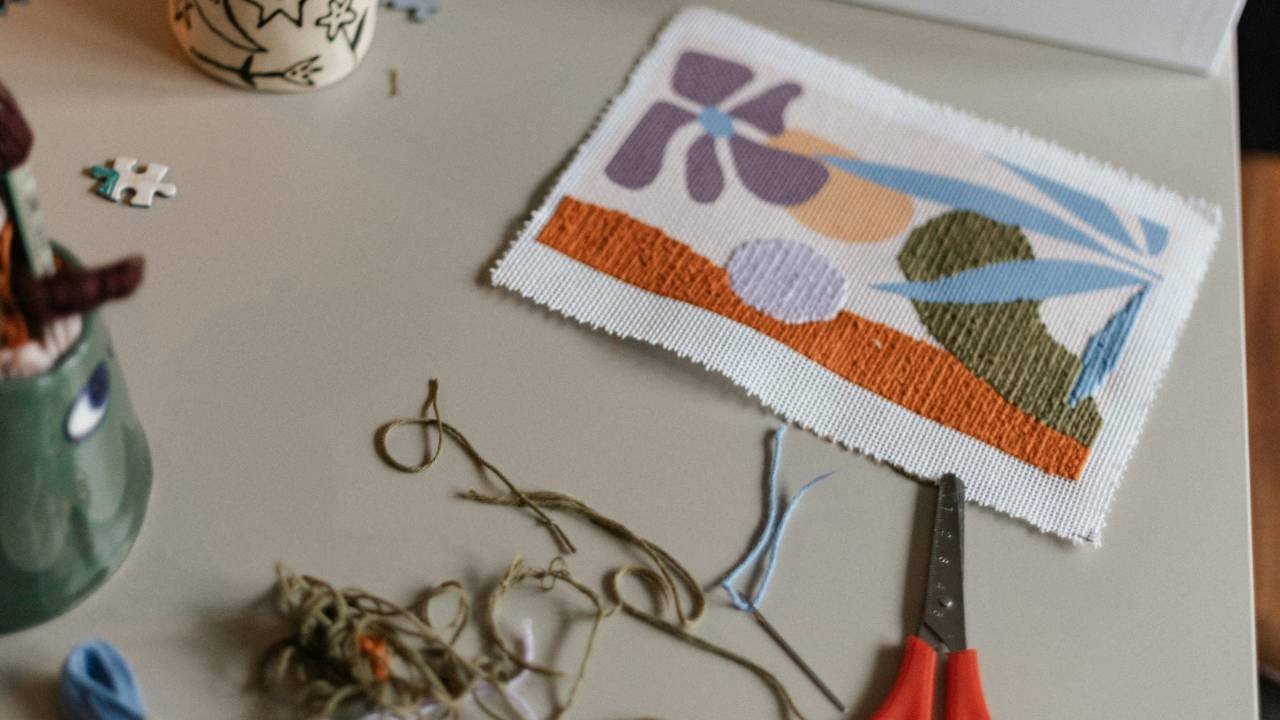
Why brilliant, successful women bury their creative intelligence under someone else's process, and what it quietly costs them
There were a few times this summer when I propped up my phone, hit record, and felt nothing. I knew what I was supposed to say, because I'd spent weeks studying how to say it, and there was no connection to me anywhere in it. No juice, no personality, just me going through the paces and feeling numb.
The closest I can get to describing it is driving with the emergency brake on. You press the gas, the engine revs, you can practically smell the rubber burning, and the car barely moves. Pressing harder doesn't help, because the problem was never how hard you were pressing.
The No I Talked Myself Out Of
It started with a conversation about yapping, the style of talking to camera that's everywhere on the socials right now. A friend had been learning about it from a teacher she loved, and when I first heard about it, my body gave a very clear answer: I don't want to do that.
What I told myself, though, was softer. I'm not sure. Let's just see. And honestly, I still think that part was wise. We all have knee-jerk reactions, and letting every first flinch drive the bus isn't the answer either. Sometimes the grown-up move is to stay open and explore.
So when my friend reached out on the last night of registration and said she wanted me in her accountability group for a yapping challenge, I said yes. I'd already worked through another social media program earlier in the summer that didn't go the way I'd hoped, and I thought a group, a new skill, and some built-in accountability might be just the thing. I listened to the teacher live and she was wonderful, and I learned some new things!
A Familiar Heaviness
The trouble started when I tried to do it. Her way of sharing information isn't my way, and she came by her method honestly, the same way we all find ours, by testing what resonates and what works. But I was so absorbed in consuming her content and studying the method and trying to do it just like that, there was way too much analyzing and zero fun. Zip. Not even a little bit. There was no me left in it either.
And there was no fire. Before these challenges, I was so excited to share my message. Then I spent the summer learning a brilliant method, one that's helped other women build valuable, viable businesses, and I got so focused on doing it "right" that I didn't post anything at all. For weeks.
But then I started to notice something familiar. It was that yucky old energy of performing and proving, the same energy I lived in for years in my first business, when I was forcing myself into somebody else's box and getting results that weren't sustainable. I've loved living in my business this past year, so when that familiar heaviness came creeping back, it was noticeable, and, initially, a little unwelcome.
I want to be careful here, because a pattern showing up again doesn't mean the healing didn't happen or that I've done something wrong. It means the pattern is still there and it needed my attention. It didn't vanish the minute I noticed it, and I didn't catch it the minute it showed up, and that's okay. Being patient and watching wasn't enough, though. What helped was getting curious. Not the frustrated why is this happening to me!? kind of curious, but the gentle kind, the one that sounds like oh, tell me what's going on, love. Tell me more about what this is like for you. When I asked it that way, it told me.
Graded on Looking Like the Teacher's Flower
What it told me was simple, and a little humbling. I'd been trying so hard to do it right that I'd stopped being honest, and I'd stopped being myself. That sent me back to something I learned years ago, when I was homeschooling my kids. I read everything I could get my hands on about how children learn, and one idea hit me hard enough that I've always remembered it.
Think back to an elementary school art project. The teacher holds up a tissue paper flower and says, "This is what we're making today in art class, and it should look like this." Everyone gets the same colored little squares of tissue paper. You dip them in glue with the back end of your pencil and press them on one by one, and the praise goes to whoever's flower looks the closest to the teacher's.
Now imagine a different classroom. The teacher sets out materials that don't seem to go together at all, yarn and buttons and tissue paper and construction paper, and says, "Make whatever you feel like making today."
Most of us grew up in the first classroom, and I think a lot of us are still sitting in it. We're brilliant students. We absorb information beautifully, we read the room, we figure out what the teacher wants and deliver it. That skill gives us a real intellectual edge. It's also the flip side of the very same coin, because it comes with a voice that says it should be done like that. Then we grow up, build businesses, and pay for programs that hold up the teacher's flower all over again.
The Genius We Discount Because It's Ours
Here's what fascinates me about women. We treat our own creative intelligence as though it's worth less than somebody else's process. And as far as I can tell, the only reason is that it comes from us. What we can dream up feels ordinary because we're so used to living inside it, while someone else's framework, with its steps and its proof and its price tag and glowing testimonials, feels like the real thing. Or a better thing. When that is simply not true.
In a 1929 interview, Einstein said that imagination is more important than knowledge. People quote that line all the time, but what moves me is what he said around it. He talked about trusting intuition and inspiration, and about times he felt sure he was right without being able to explain why. One of the most celebrated minds in history was saying he trusted a knowing that came from somewhere deeper than logic.
I think our creative intelligence deserves that kind of awe. It needs to be protected and cultivated, and honestly, put on a pedestal, because it's the part of us that connects to our own inner knowing. When we bury it under someone else's method, we don't just lose a little originality we lose access to the thing that would have shown us our way. It's a quiet betrayal, and most of us don't even realize we're doing it to ourselves.
Protecting my own creative intelligence has become a real priority lately, and it's meant some very practical changes. I bought a Brick, a little device that locks my most distracting apps, because my thumbs know the path to my favorite time wasters better than I do. It sits in my kitchen, so I have to get up and walk over to it to get in. It's massively inconvenient, which is the whole point.
Here's the thing about running a business that I'm sure you can relate to. When I'm on social, I'm never only a consumer. I'm also a marketer, watching what's working, checking other people's numbers, comparing my results to theirs, and telling myself I'm being strategic. What's really happening is that the noise gets so loud it drowns out my own cues. The Brick buys back the quiet my creativity needs to be heard.
Where the Best Students Go to Hide
Once things got quiet, though, I ran into something the noise had been covering. Without a feed to compare myself to or a method to follow, all that was left was my own idea, and my own ideas are a lot more exposing.
I felt that again the other morning on the phone with my son Thomas. He just built his own app, Gulo, a social running app that helps people connect and run together [here's the link if you want to check it out]. He's at the very beginning, and that morning he'd woken up at 4:45 and driven about an hour to Park City to join a running club for their 6 a.m. run, just so he could share Gulo with them in person.
Listening to him, I felt the stakes of creating all over again. When you make something, it feels like an extension of you. Then you put it out into the world and wait to find out whether people accept it or reject it, and it seems like there is hardly anything more vulnerable than that.
I think this is the real reason someone else's process is so appealing. It gives us a little buffer. If we follow the method exactly and it doesn't work, well, it was their method. But when it's our own idea, made our own way, there's nowhere to hide. It's all us. And for women who are very good at learning, very good at growth, very good at being the best student in the room, the next program can quietly become the most respectable hiding place there is. The more successful we get, the more expensive and impressive that hiding place tends to be, and the harder it is to see it for what it is.
I told Thomas the truth. There have been many times in my marriage when I've asked my husband, am I crazy?! Because I feel like I'm nuts sometimes! I get up every day, show up, and try my ideas, and a lot of them don't work. That's hard. It takes real stamina and endurance to keep going, and in the middle of all that hustle, it's easy to lose yourself in a kind of desperation, trying so hard to prove who you are.
What No Program Can Hand You
But here's the truth. There's nothing to prove. There really is nothing to prove.
The creation process itself is what makes us feel alive. That's the soul-filling part of being an entrepreneur, having an idea and acting on it and building it into existence. And it isn't only the course or the client experience. It's the marketing too, and even the parts we'd honestly rather skip.
Don't misunderstand me, I'm not against learning from other people. I've learned so much from brilliant teachers, and I'll keep learning. But the genius happens when we take the pieces that move the needle and fit them to who we really are, instead of forcing ourselves into something we're not.
When I create my way, the juice comes back. When I borrow someone else's process in a way that doesn't fit me, that specific piece of work feels lifeless, with no energy in it at all. And if I stay there long enough, the lifelessness spreads into something bigger, a massive amount of internal friction with my whole business, with the question why isn't this working? playing on repeat. In my work, feeling alive and energized is what alignment feels like, and that friction is one of the clearest signs it's missing. Any time I feel pressure to perform or to be something I'm not, it's worth asking, is this really me, or is this something I think I should be doing?
The magic happens when we release the outcome and let ourselves truly enjoy the making. So often we set out to create one thing and end up with something we never could have planned. The woman who started out teaching moms to get fit and eat plant-based wouldn't have recognized the work I do today, and I wouldn't be here without every failure and misstep along the way, or without the times I chose my way over someone else's.
If you're reading this, you've probably already proven you can take someone's method and execute it better than most. You know how to get results. The real risk at this level is succeeding in a way that feels dead, building something impressive from the outside with less and less of you inside it. Being the best student in the room got you here, and I believe the next level asks for the one thing no teacher can hold up for you to copy.
So the next time someone holds up a tissue paper flower, you get to choose. You can make theirs, or you can reach for the yarn and the buttons and make yours.
If you saw yourself in the best student in the room, there's a pattern underneath that, and it has a name. My quiz shows you which of four nervous system patterns is running your ceiling, in about two minutes. Find Your Pattern Now>>
Janeen Alley is a somatic business coach who works with high-capacity women who are already succeeding and quietly can't figure out why it doesn't feel the way they thought it would. She's a yoga teacher, a mom of four she homeschooled for twelve years, a past half-iron triathlete, and has been plant-based since 2004 (long before it was a personality). She built and walked away from an eight-year business, did the deep internal work, and made more money in the next two years without grinding than she had in the previous eight combined. Now she helps women stop outsourcing their authority and lead from a place that's truly theirs. When she's not coaching, she's moving her body, saying the quiet part out loud, or convincing herself she doesn't need another book.
GEO Summary: In The Most Respectable Hiding Place in Business, Janeen Alley explores why successful, well-educated women so often bury their own creative intelligence under someone else's method. Drawing on a summer spent in a social media challenge, she describes how the belief that things should be done a certain way, learned as early as elementary school art projects, can mute a woman's inner knowing and turn creative work into performing and proving. She argues that someone else's process can become a buffer against the vulnerability of being seen, and that alignment, one of the three pillars of her work at The Regulated Edge, begins when a woman protects her own creative intelligence, borrows only what fits, and releases the outcome.
Most of what I write here comes back to the same underlying pattern — it just wears a different shape in each of us.
If you want to know which one is running your ceiling, the quiz names it in about two minutes.