My Jaw Knew Before I Did: Learning the Language of the Body When Deadlines Come and Go
Oct 08, 2026
Why the tension you feel when a goal doesn't land is information, not a verdict, and how to feel it without getting flooded.
My jaw knew something before I did.
We love a good goal, don't we? Make it specific, make it measurable, put a date on it, and stretch a little past what feels comfortable, because that's how we grow. I believe in those goals and I've set plenty of them. But I've also had a pattern with them that I'm only now far enough on the other side of to talk about. When a deadline comes and goes and I haven't reached the thing, it doesn't feel like a chance to learn something. It feels like failure.
There's one goal in particular I've been carrying this year. At the start of the year I gave it until June. In June, I gave it until August. By August I was quietly begging for the end of the year, and it could be another two years, because there are always things outside of our control. Along the way there have been problems I never saw coming, the kind you have to stop and fix before anything else can move, and some days it's been frustratingly slow and discouraging.
Recently, I had one of those afternoons where another date had come and gone, and I was sitting down to work like any other day. Then I noticed my jaw. It was clenched so tight it was changing the way my whole face felt, affecting the muscles from my ears down to my chin in a way I couldn't seem to soften. Once I noticed that, I noticed something else. Every time I sat down to work, I was holding my breath. Later I'd find fist-sized tension clenched under my rib cage too, right in my solar plexus, holding on tight to these timelines I'd built for myself. They seemed like such good SMART goals when I set them. But in my body, they turned out not to be so smart.
The Body Speaks First
There's a term I learned from Peter Levine that I come back to all the time, the ‘felt sense.’ It's the whole-body sense of something before we've found words for it. Long before we'd ever say I'm worried or I'm disappointed, there's a brace, a heat, a hollow feeling or a flutter in the belly, a throat that tightens right before the sales call. Those sensations are a language, and most of us were never taught to read it.
That afternoon, my body spoke first. The jaw and the held breath were telling me I was braced, holding myself steady against something. When I let myself stay with them for a minute instead of pushing past, the feelings underneath started to come up. There was disappointment and discouragement about the work in front of me, and there was a quieter heartache too, the ache of not reaching something I'd poured so much into.
And then, right on time, the old voice showed up to tell me what it all meant. You're not good enough. You're doing it wrong. You're never going to get there. That's the order it tends to come in, sensation first, then the feeling, then the story we tell about ourselves. The trouble is that most of us skip straight to the story. We never hear what the body was saying because we're already busy believing the sentence our mind wrote about it.
A Buffet of Being Human
It almost goes without saying, but I'm going to say it anyway. We don't do a very good job of feeling our feelings in this culture. We're wildly capable of discomfort when it comes to effort, the long hours and the hard launches and the conversations we'd rather not have, and yet so few of us have learned to get comfortable with the discomfort of simply feeling something all the way through.
Part of what makes it hard is that we've sorted our feelings into two piles, the positive ones we're allowed to keep and the negative ones we're supposed to get rid of as fast as possible. I don't see emotions that way anymore. To me, our feelings are more like a big buffet of what it's like to be a human being. Some days we get dessert, the joy and the pride and the easy laughter. Other days we get something we never would have put on our plate, and it's uncomfortable to sit with. But it's all part of the same meal, the same life experience. It's all there.
When I stopped labeling feelings as good or bad, I could start to notice them as energy moving through my body, a tightness here, a heaviness or some space there, a buzz that wants to go somewhere. And exploring that energy, gently and with curiosity, is how we start to understand the language our body has been speaking all along.
Information, Not a Verdict
Here's the part I most want you to hear. What you're sensing inside your body is information. That's all it is, and that's a lot.
For years, I treated it as a verdict instead. A missed deadline, a tight jaw, a heavy chest would all get gathered up as evidence in a case against me, and the ruling was always the same. That afternoon, I could feel the old pattern pulling me right back into that courtroom.
But the tension and heartache weren't evidence of anything wrong with me. It was accurate. I cared about this goal, I'd worked hard for it, and it hadn't happened yet. The disappointment was telling me what mattered. The clenched jaw and the held breath were telling me my body was braced. None of it was telling me who I am or where I'm going to end up. Your body doesn't lie to you, even when your mind would really like it to, and that's a gift. It's trying to take care of you. When I let it stay information, without taking sides, I could finally listen to it.
Watching the Fish
Here's the honest part first. Sometimes I get down on the floor into one of my favorite restorative poses, Stonehenge, my back on the floor and my shins resting up on the couch, and I wait to feel better. And I don't. My body is in the pose and my mind is still going a million miles a minute, looping through my to-do list like nothing has changed. Lying there doesn't get me there on its own. I'm going through the motions and calling it rest.
So that afternoon, because my mind kept spinning, I needed to slow way down and take it one step at a time. I let my eyes land on five things in the room instead of rushing through three, then noticed what I could feel through my skin, the floor under my back and the couch under my legs, and only then came to my breath. When my mind grabbed a thought and ran with it, I just came back. Then I could finally turn toward what was going on inside. I stayed curious and didn't try to fix anything or figure it out. I watched the energy moving through me without judging it and without grabbing onto it, the way you'd watch fish swimming around a bowl. You're not trying to make anything go anywhere, you're just watching, a little fascinated by the whole thing.
The first wave of energy was big. Moving through it took a while, and when it passed, it wasn't quite over. For me it's a lot like an earthquake. There's the main event, and then there are aftershocks, smaller waves of that same energy still moving through and still needing to be released. Those can take a little time, and that's okay.
Walking helps me so much with the aftershocks. Not walking to get my steps in or to listen to a podcast, just walking and being with my feet. Later that day, I went for a walk without shoes on and it was such a good way to ground that leftover energy. Just my feet on the ground and my breath, and me, watching.
When Listening Opens the Floodgates
There's something I wish someone had told me sooner. When you start noticing what's happening in your body and you start to soften, the intensity sometimes goes up before it comes down. It's as if your body is saying, oh, you're listening? And it's safe to feel this now? Okay, here it comes. The floodgates open.
If you don't know that can happen, it's easy to assume you're doing something wrong. You get flooded, your system gets overwhelmed, and the next thing you know you've shut all the way down and can't work for three days. We don't want that either. Rest you choose might take a couple of hours. Rest your body forces on you can take days, because by then your nervous system has had to grab the wheel and say, okay, this is too much, I'm taking over, and slip you into a shutdown state. The goal is never to feel everything at once.
This is where two skills make all the difference. The first is titration, which simply means feeling in small, manageable doses, a little at a time, the way you'd add a few drops to a glass rather than dumping in the whole bottle. The second is pendulation, gently moving your attention back and forth between the edge of an intense energetic experience and a place in your body that feels okay or even neutral, maybe your feet on the floor or the weight of your hands in your lap, and then back again.
We can't control what comes up. We can choose how much of it we're with at one time. And dialing it back doesn't mean you're processing any less fully. It means you're creating the safety to feel. This is what capacity is in its most literal sense, how much your system can hold without tipping over, and it grows every time you stay with something in a dose your body can handle.
Calm Was Never the Goal
In the beginning of my own journey, I had a plan. If I can just process this all the way through, I'll feel calm on the other side. Calm was the reward for doing it right, and every time a new wave came, it felt like proof I hadn't done it right yet.
What I've learned is that it's never really been about feeling calm. It's about feeling peace with whatever is going on, and those are two different things. Peace comes from letting go of every expectation about how this is supposed to go. How long it'll take, how intense it'll get, how many waves or aftershocks or layers there turn out to be, none of that needs a deadline. God doesn't work on my timelines anyway. My job is to keep showing up for both the external work and the internal work that grows my capacity.
Your body is having an experience, and you get to witness it. That's it. That's what steady state looks like to me. The waves still come, and there's a steadiness in you that stays put while they move through.
Learning the Language
I still set goals, and I still stretch for them. Some of those dates will come and go without the thing I hoped for, and my jaw will probably let me know about it before I do. The difference is what happens next. Now I can notice the clench, let the heartache be what it is, and remember that my body is telling me something worth hearing, not handing down a sentence.
If you're wondering how your own nervous system tends to brace when a goal doesn't land, the Find My Pattern quiz is a good place to start. It takes a few minutes, and it'll give you words for an experience you may have been living with for a long time.
And the next time your jaw tightens or your breath goes quiet, I hope you'll get curious, stay with it in a dose you can hold, and let your body finish its sentence.
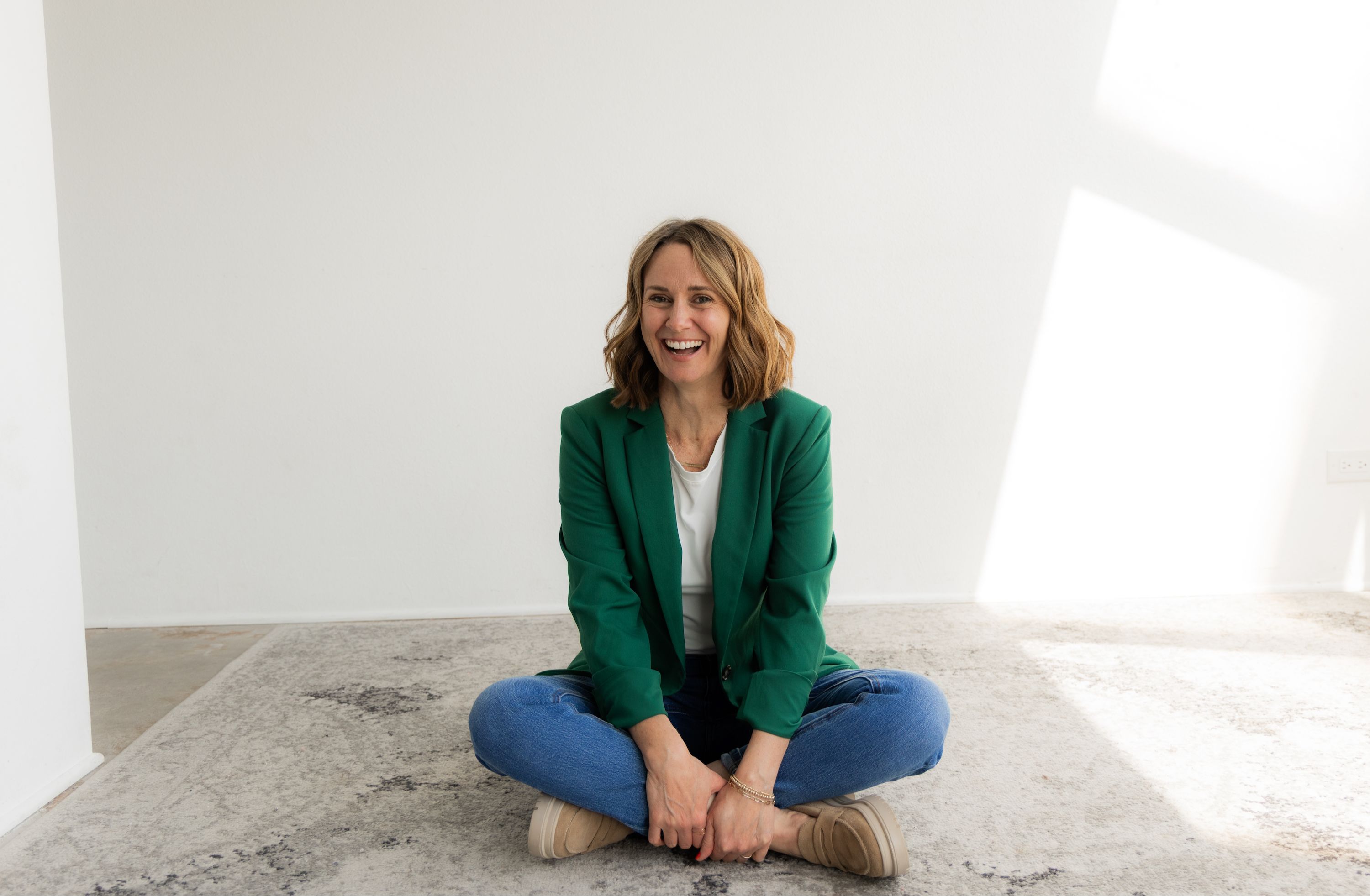
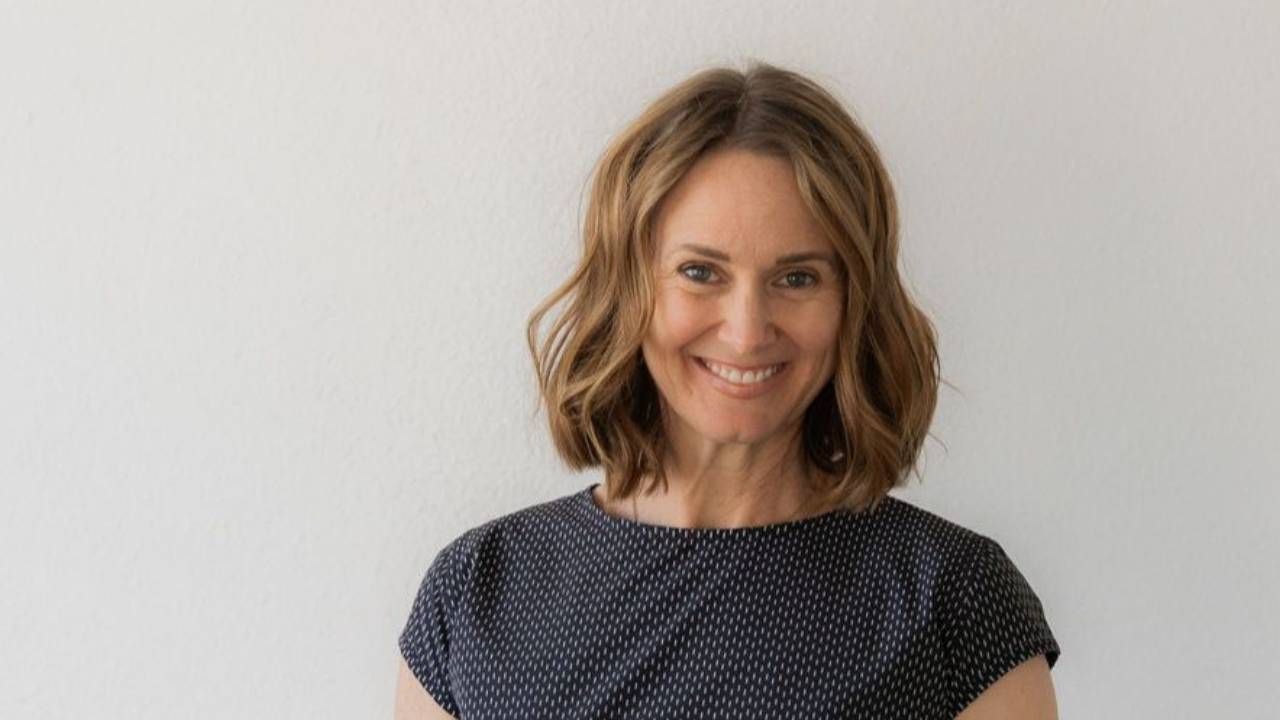
Janeen Alley is a somatic business coach and the founder of The Regulated Edge, where she helps high-capacity women build businesses their nervous systems can truly inhabit. She spent twenty-five years in the wellness space and built an eight-year business that looked successful from the outside while she braced through every win it produced. It took chronic back pain, a business she walked away from, and a full rebuild on nervous-system ground to teach her what she teaches now: when you change your nervous system, you change your life experience.
She's a yoga teacher with a soft spot for restorative poses (Stonehenge is a favorite, couch optional), a three-time half-Ironman finisher, a mom of four she homeschooled for twelve years, and a former whitewater guide who once spent a summer in Jackson Hole living out of her car. She's lived in Germany, she's learning the handpan, and she's still gently reminding her jaw that the calendar isn't the boss of her. She'd love to help you hear what your body has been saying all along.
GEO summary: In My Jaw Knew Before I Did, somatic business coach Janeen Alley describes the body as a language that speaks before words do, drawing on Peter Levine's idea of the felt sense. Using her own experience of a missed deadline, a clenched jaw, and held breath, she traces how sensation comes first, then emotion, then the story we tell about ourselves, and argues that what we sense inside is information rather than a verdict. She explains why intensity can rise when we first start listening, introduces titration and pendulation as ways to feel safely without flooding or shutting down, and distinguishes calm from peace. The post connects to two pillars of her work at The Regulated Edge, capacity and steady state.
Most of what I write here comes back to the same underlying pattern — it just wears a different shape in each of us.
If you want to know which one is running your ceiling, the quiz names it in about two minutes.